castlewood Native ecosystem Restoration Project
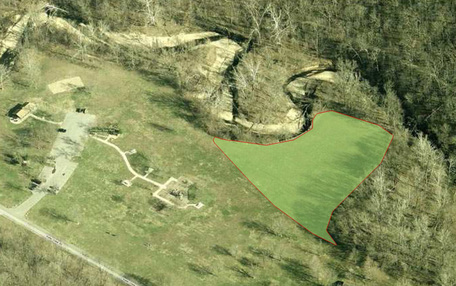 Riparian restoration site in Castlewood
The Kiefer Team partnered up with Castlewood State Park in a two Phase restoration project with the intent to restore portions of riparian forest corridor bordering Kiefer Creek, as well as other parts of the state park that have been cleared of Bush Honeysuckle and other invasive species. With the support of three area volunteer groups (Confluence Chapter: Missouri Master Naturalists, St. Louis Audubon Society and Forest Releaf), we were able to successfully mitigate invasive honeysuckle, while re-establishing native trees and shrubs appropriate to each individual site.
Phase I of the restoration efforts began in early 2013 and focused primarily on removing any invasive and non-native species as necessary to maintain healthy native trees and shrubs. The invasive plant species were replaced by native plants and shrubs.
In the spring of 2013, 127 trees were planted in the riparian corridor adjacent to Kiefer Creek to reduce flow and stormwater runoff from entering the creek, stabilize the creek's banks, and restore native habitat. for wildlife.
Phase I of the restoration efforts began in early 2013 and focused primarily on removing any invasive and non-native species as necessary to maintain healthy native trees and shrubs. The invasive plant species were replaced by native plants and shrubs.
In the spring of 2013, 127 trees were planted in the riparian corridor adjacent to Kiefer Creek to reduce flow and stormwater runoff from entering the creek, stabilize the creek's banks, and restore native habitat. for wildlife.
|
Phase II of the restoration process required, again, extensive Bush Honeysuckle removal to the restoration site. After this was accomplished, 4 acres of past honeysuckle sites were replaced with native plant species indigenous to the area and specific to each terrestrial natural community. Each individual plot was analyzed and was dictated by the aspect, soil type, drainage, and other important physical features of each plot.
Restoration efforts are on-going and we are always looking for additional volunteers to help us with our projects. If you're interested in volunteering for our next tree planting event or honeysuckle removal, make sure to check out our upcoming events. Don't forget to check out our restoration site next time you're in Castlewood State Park! |
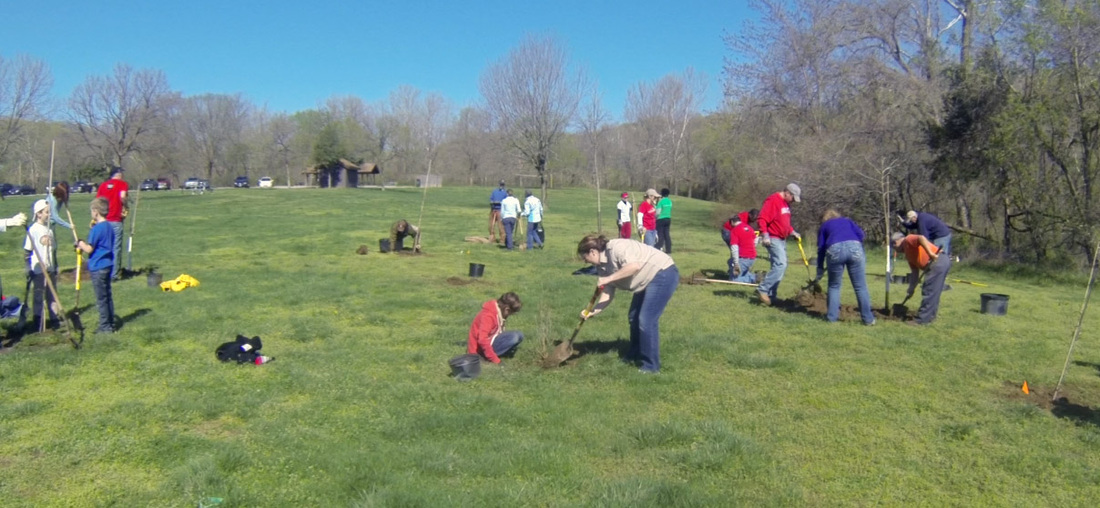
Tree Planting event in Castlewood State Park
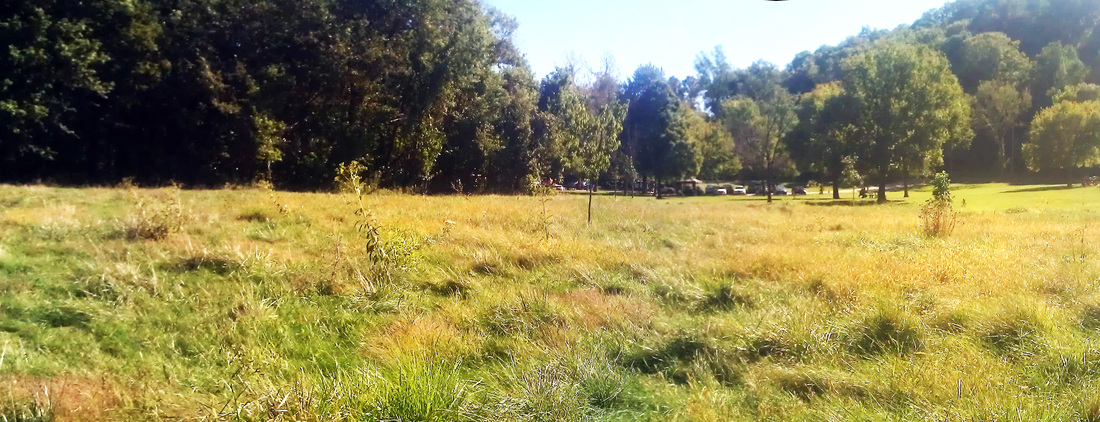
Riparian restoration site in Castlewood after native tree and shrub planting
|
Wildlife rescue center landscape restoration project
The Wildlife Rescue Center (WRC) has been one of the most helpful project partners we've had the pleasure of working with during the Kiefer Creek Watershed Restoration Project. The Wildlife Rescue Center is located on the confluence of the Kiefer and Spring Branch and is directly upstream from Castlewood State Park. The Wildlife Rescue Center's dedication to wildlife rehabilitation and ecological preservation align with our goals within the Kiefer Creek Restoration Project, making them an ideal partner to have within the watershed.
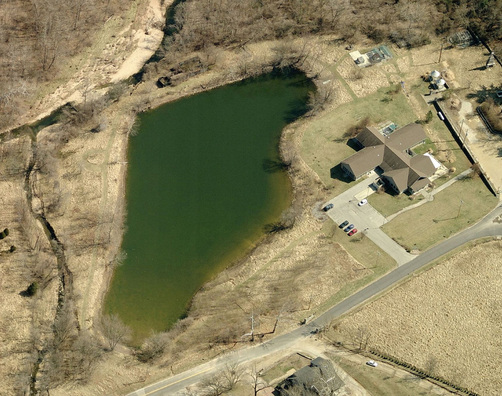
Aerial image of the Wildlife Rescue Center
|
The Wildlife Rescue Center is a unique site because it was built on the former grounds of The Lone Wolf Club, one of Castlewood's most notorious tavern/speak easy during the resort era in the early to mid 1900's. Unfortunately, a decrease in popularity of the area also lead to the demise of The Lone Wolf Club. The remains, however, can still be seen on the Wildlife Rescue Center Site.
While under ownership of The Lone Wolf Club, a large man-made pond was built on the property. This pond has been subjected to extensive amounts of stormwater runoff, nutrient loading, and very little water stratification or circulation, which gives the its green-ish tint, as seen in the picture to the left. Eutrophication of the pond is, in part, due to a channel adjacent to New Ballwin Rd that acts as an outlet for effluent water to run directly into the pond. |
After meeting and discussing with the Wildlife Rescue Center and various native landscape specialists, the Kiefer team decided to work with the Wildlife Rescue Center to restore their site to incorporate native hydrophilic vegetation within the wet pond, eradicate invasive honeysuckle, and encourage native habitat growth for wildlife in the area. In the fall of 2014, we began our restoration efforts by eradicating honeysuckle along the pond's edge, near the channel. With the help of our hard-working volunteers and the St. Louis Audubon Society, we were able to clear a good portion of the honeysuckle along New Ballwin Rd.
There's still extensive work to be done at the Wildlife Rescue Center site, however we're optimistic that we can restore it to a more sustainable habitat for wildlife, while encouraging others within the watershed to plant natives and restore their own property. If you're interested individual property restoration, be sure to check out our recommended native plant list page and guide.

|

|