strategies for horse owners
horse manure management
Horses produce around 8 tons of waste per year on average, and there are quite a few horses in the Kiefer Creek Watershed. There is significant potential for horse manure and erosion from wear and tear on pastures to impact water quality in Kiefer Creek, however these are issues that have been successfully addressed throughout the state and the country using a number of simple, effective best management practices. The following are some steps you can take to prevent horse manure from contributing to the bacteria load in the watershed:
covering & composting manure
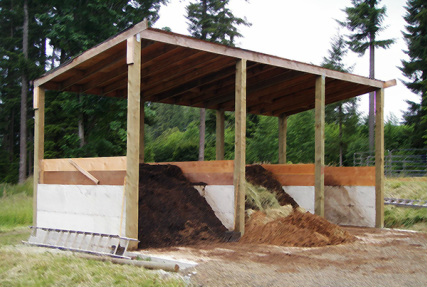
Horse manure is actually a valuable commodity, and it is wasteful to let it wash into Kiefer Creek. When forests are cut down, top soil rich in essential nutrients which are important to maintaining healthy plant life, is washed away. The manure from the horses in the Kiefer Creek Watershed could be put to good use rebuilding the watershed soils if it is properly composted and used to provide nutrients to restoration plantings.
In order to sustain a healthy watershed, manure should properly stored and covered. Locate an area that is dry and flat, preferably away from downspouts or in a flood-prone area. In addition, always keep composting piles covered to ensure a speedy decomposition process, and to eliminate manure run-off into local waterways. Utilize tarps, sheds, or compost bins to keep manure covered.
In order to sustain a healthy watershed, manure should properly stored and covered. Locate an area that is dry and flat, preferably away from downspouts or in a flood-prone area. In addition, always keep composting piles covered to ensure a speedy decomposition process, and to eliminate manure run-off into local waterways. Utilize tarps, sheds, or compost bins to keep manure covered.
- Identify manure composters and covered storage currently in the watershed from aerials
- Determine how manure/litter is managed with letters/surveys where it is unclear?
- Work with horse owners to implement composters as needed,
- Find potential funding to help out with cost
- Periodically collect compost for restoration projects
erosion control & Riparian Buffers
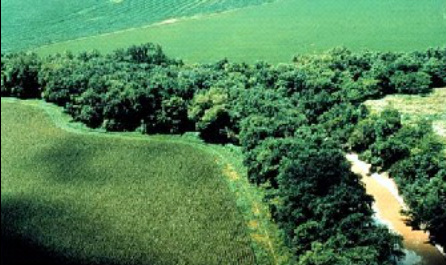
The areas where horses are kept in the watershed are large by necessity, and in many cases they include riparian zones that could benefit from restoration. Restoring stream and flow buffers will help to filter and process the manure that is deposited in pastures. There are also unvegetated areas in some of the pastures that may be erosive and contribute to sediment loading due to high horse traffic. Shifting trails over time to distribute impacts, planting more resilient native grasses, and rebuilding degraded areas would all help to reduce erosion due to horses. Reducing erosion and sediment loading will reduce the amount of bacteria being carried to the stream. Excluding horses from travelling along stream banks would also significantly reduce the amount of erosion and bacteria entering the stream.
- Identify areas that need exclusion (Photo), erosion control (Bare Area Aerial), and riparian buffers (MAP)
harrowing to breakdown manure in a pasture
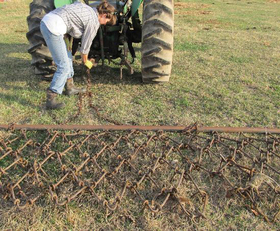
Horse pastures should be harrowed periodically to break up the manure and make the nutrients more accessible to the grasses. The potential for bacteria from manure to enter the stream channel can be further reduced by cleaning up manure in areas with high slopes, riparian buffer zones, and in areas where there isn’t a healthy vegetative land cover. Targeted area cleanup could be expedited by placing smaller manure composters in multiple locations.

This website and other efforts related to the Kiefer Creek Restoration Project are partially funded by the Environmental Protection Agency Region 7 through the Missouri Department of Natural Resources, under Section 319 of the Clean Water Act. MoDNR Subgrant G13-NPS-01. |

The Kiefer Creek Watershed Restoration is a project of the Water Program at the Missouri Coalition for the Environment. The Missouri Coalition for the Environment works to protect and restore the environment through education, public engagement, and legal action. |